
Table of Contents
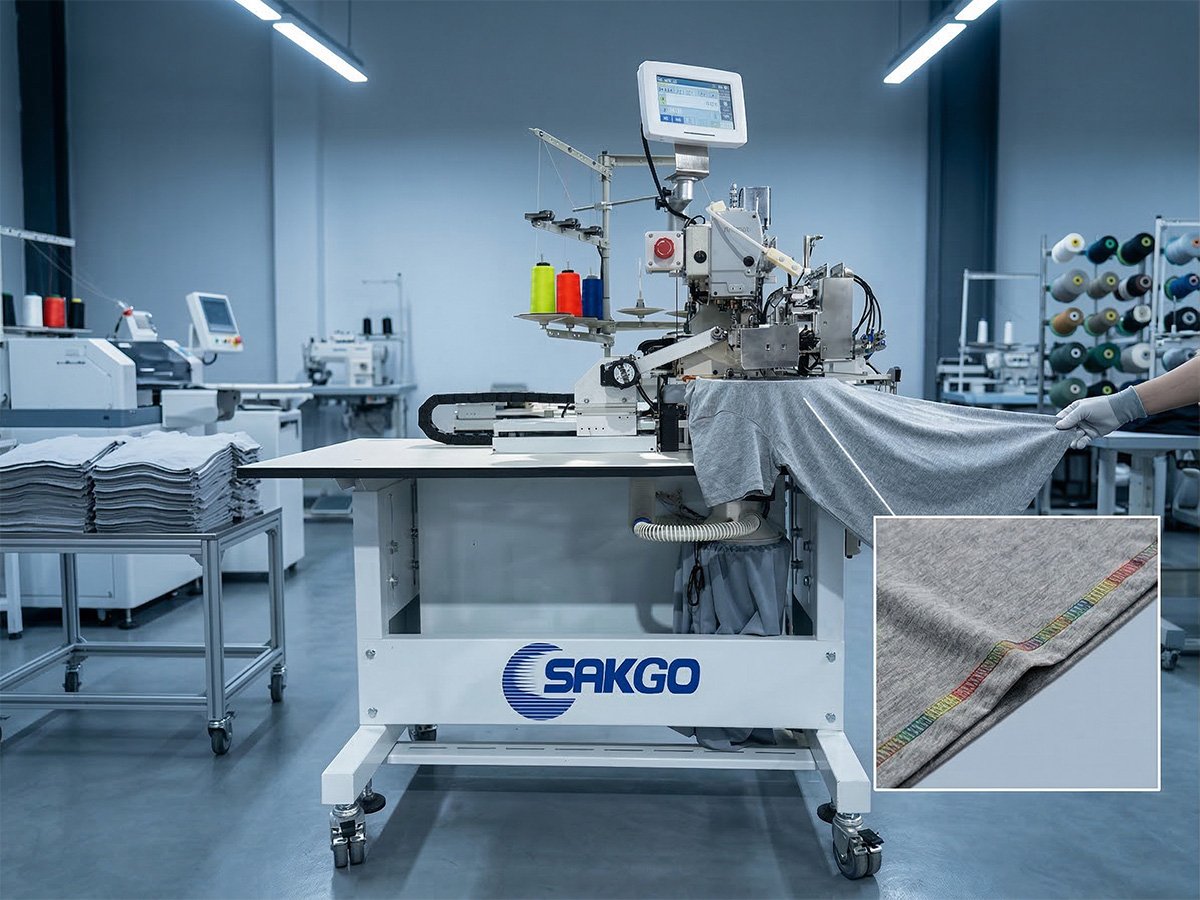
What Is an Automatic Hemming Machine and How Can It Improve Garment Production?
In garment manufacturing, hemming is one of the most common sewing processes, but it is also one of the most repetitive and labor-dependent. Whether a factory produces T-shirts, underwear, children’s wear, or knit garments, the quality of the hem has a direct impact on the final appearance of the product. This is why more manufacturers are paying attention to the value of an automatic hemming machine.
An automatic hemming machine is designed to make hemming faster, more consistent, and easier to manage in bulk production. Compared with manual sewing methods, it helps factories reduce quality variation, improve production efficiency, and lower dependence on highly skilled operators.
What Is an Automatic Hemming Machine?
An automatic hemming machine is a specialized machine used to sew hems on garment openings such as bottoms, sleeves, pant legs, and tubular knitwear parts. Instead of relying only on manual control, the machine helps guide or automate the hemming process so that the fold width, stitch line, and finished appearance stay more consistent.
Depending on the garment type and sewing application, the machine may also be described as a:
-
hemming machine
-
industrial hemming machine
-
bottom hemming machine
-
sleeve hemming machine
-
t shirt hemming machine
-
automatic tubular hemming machine
Although the exact machine structure may vary, the main purpose is the same: to improve hemming performance in garment production.
Why Hemming Is Important in Apparel Manufacturing
In many garment categories, hemming is a key finishing process. A clean and even hem improves product appearance, supports better fit, and gives the garment a more professional look. On the other hand, poor hemming can create visible quality problems such as:
-
uneven hem width
-
twisted seam lines
-
poor fold consistency
-
stretching or distortion on knit fabrics
-
unstable output between operators
These issues are especially common in factories that handle large-volume orders with multiple sewing workers. In this situation, an industrial hemming machine becomes more valuable because it helps create a more repeatable production process.
Main Benefits of an Automatic Hemming Machine
1. Higher production efficiency
A major reason factories invest in an automatic hemming machine is speed. Manual hemming takes time, especially when operators need to control fold width and fabric feeding carefully. Specialized hemming equipment helps reduce handling time and improve output.
For factories producing large quantities of T-shirts, knit tops, underwear, or similar items, even small efficiency improvements can make a big difference across the whole production line.
2. Better consistency
Consistency is one of the most important goals in garment production. Customers expect all pieces in the same order to look alike. A hemming machine helps maintain more stable seam appearance and fold accuracy, which is especially important for export orders and branded garments.
A bottom hemming machine or sleeve hemming machine can help reduce visual variation between pieces and make final inspection easier.
3. Reduced dependence on skilled labor
Manual hemming often depends heavily on operator experience. In many factories, good hemming results come from highly skilled workers, but this creates labor pressure. It can also lead to unstable output if operators change.
By using an automatic hemming machine, factories can standardize the process more effectively and reduce the risk created by differences in operator skill.
4. Better control for knit and tubular garments
Knitwear and tubular garments can be more difficult to handle than flat woven pieces. Fabrics may curl, stretch, or shift during sewing. An automatic tubular hemming machine is especially useful in this type of production because it is built to support more stable hemming on round or tubular garment parts.
5. Lower rework rate
When hemming quality is unstable, rework increases. This affects delivery schedules, labor costs, and production planning. A more specialized hemming process helps reduce common problems and improves first-pass quality.
Common Applications of a Hemming Machine
A garment hemming machine can be used in many product categories, including:
T-shirts
A t shirt hemming machine is commonly used for bottom hems and sleeve openings. For knitwear factories, this is one of the most practical hemming applications.
Underwear
Leg openings and certain edge finishes in underwear production require clean, stable hems. Automation can help improve repeatability in this process.
Children’s wear
Children’s garments often involve smaller sizes and repeated sewing operations. Stable hemming helps maintain quality and improve efficiency.
Knitwear
Knit fabrics are widely used in modern apparel production, but they can be challenging to hem consistently. A suitable industrial hemming machine can help manage this better.
Casualwear and sportswear
Many casual garments and sportswear items include repetitive hemming work, especially on sleeves, bottoms, and leg openings.
Automatic Hemming Machine vs Manual Hemming
Factories that are still using mostly manual hemming often face the same problems: output depends on the worker, quality varies from person to person, and training takes time.
With manual hemming:
-
efficiency is lower
-
consistency depends on skill
-
quality control becomes harder
-
rework can increase
With an automatic hemming machine:
-
output becomes more stable
-
hemming quality is more repeatable
-
the process is easier to standardize
-
factories can scale production more effectively
This does not mean manual sewing has no value. For small orders, sampling, or highly varied styles, manual sewing may still be useful. But for repetitive bulk production, a hemming machine usually offers stronger long-term value.
How to Choose the Right Hemming Machine
Choosing the right machine depends on the factory’s actual production needs. Here are several important factors to consider:
Garment type
Are you producing T-shirts, underwear, kidswear, or other knit garments? The answer affects the type of hemming machine you need.
Sewing application
Do you need a bottom hemming machine, a sleeve hemming machine, or an automatic tubular hemming machine? Different applications may require different machine designs.
Fabric behavior
Stretch fabrics, lightweight fabrics, and tubular knitwear can behave differently during sewing. Machine suitability matters.
Production volume
If the factory handles repeat bulk orders, automation usually creates better returns than general-purpose sewing equipment.
Quality requirements
If customers care about appearance consistency, investing in a more stable hemming process can help improve the final product.
Why Hemming Automation Matters Today
Garment factories today face pressure from many directions: labor shortages, rising labor costs, shorter delivery times, and stricter quality expectations. In this environment, process-specific automation becomes more important.
A general sewing machine may be flexible, but it is not always the most efficient solution for repetitive production tasks. A dedicated automatic hemming machine gives factories a more focused way to improve one of the most common sewing operations.
This is particularly valuable in production lines where hemming is repeated every day across large order quantities.
Conclusion
An automatic hemming machine is more than just a sewing machine. It is a practical production tool for garment manufacturers that want to improve hemming quality, increase efficiency, and reduce variation in bulk orders.
For factories producing T-shirts, knitwear, underwear, children’s wear, or other apparel with repeated hemming operations, the right hemming solution can help create a more stable and professional production process.
If your factory is looking for ways to improve output and maintain better seam consistency, investing in a suitable industrial hemming machine may be the right next step.
FAQ
What is an automatic hemming machine used for?
It is used to sew hems on garment parts such as bottoms, sleeves, pant legs, and tubular knitwear openings with better efficiency and consistency.
What garments can use a hemming machine?
It is commonly used for T-shirts, knitwear, underwear, children’s wear, casualwear, and sportswear.
What is the difference between a sleeve hemming machine and a bottom hemming machine?
A sleeve hemming machine is mainly used for sleeve openings, while a bottom hemming machine is used for garment bottoms. Some factories may use different equipment depending on the application.
Is an automatic tubular hemming machine suitable for knit garments?
Yes. It is especially useful for tubular knitwear and round garment parts that are harder to manage manually.
Why do garment factories use industrial hemming machines?
They use them to improve output, reduce labor dependence, increase consistency, and lower rework rates in mass production.